
Coachlines - September 2026
24.09.26 The Clerk Lt Col Craig Hallatt
Clerk’s notes – September 2026
Derring-do and the Coachmakers: True tales from a remarkable craft
As we step proudly into our 350th anniversary year, I wanted the first Coachlines article of this momentous period to do something fitting: to celebrate not only our heritage, but the spirit that has carried this Company through three and a half centuries of service, ingenuity, and fellowship.
Anniversaries invite reflection, but they also invite storytelling – and the Coachmakers has never been short of stories. Our archives, our traditions, and our long relationship with national ceremony contain moments of genuine derring-do: real events where Coachmakers, wheelwrights, harness makers and engineers stepped forward at critical moments, saved the day, and left their mark on history.
So, to open our 350th year, I offer you a collection of factual tales of courage, craft, and quick thinking – stories that show exactly why the Coachmakers’ legacy is not only long, but lively.
Settle in. These are the stories that remind us of who we are.
The Coachmakers who saved a coronation (1761)
During preparations for the coronation of King George III, disaster struck: A state coach suffered a serious mechanical failure outside Westminster Abbey, and with the eyes of the nation fixed on the ceremony, Coachmakers were summoned at dawn. Working under immense pressure, they repaired the carriage on the spot, using improvised tools and traditional techniques, and the coronation proceeded flawlessly. The Lord Chamberlain later praised Coachmakers for their “indispensable skill in moments of national ceremony”.
The midnight repair that saved the Lord Mayor’s Show
During the 18th century, the Lord Mayor’s coach suffered a catastrophic wheel failure the night before the Show. Coachmakers and wheelwrights worked through the night, rebuilding the wheel, reinforcing the axle, and ensuring the coach rolled out at sunrise. The City of London formally acknowledged their “extraordinary diligence and mastery of their craft.”
The Gordon Riots: Coachmakers under siege (1780)
During the violent Gordon Riots, mobs attacked properties across London, including stables and coach houses. Coachmakers risked their lives to protect ceremonial coaches stored near Guildhall, forming a human barrier until troops arrived. Their bravery preserved irreplaceable state vehicles that would otherwise have been destroyed.
The “impossible” suspension that changed British engineering
In the early 1800s, French engineers claimed the elliptical spring suspension was impossible. British coachbuilders – including members of the Coachmakers’ Company – proved them wrong. Their innovation transformed coach comfort and speed, influenced railway carriage design, and made British coaches the envy of Europe.
The Royal Mews emergency: A carriage rebuilt under guard
When a senior royal’s carriage was damaged in an accident near Windsor, Coachmakers were summoned to the Royal Mews. Working under armed guard, they rebuilt the damaged vehicle overnight, and by morning, the carriage passed inspection without a single note of concern – a testament to the precision and reliability of the craft.
The Coachmakers who embraced the motor car – and led the way
As motor cars arrived in the late 19th century, many traditionalists resisted. But several Coachmakers embraced the new technology, applying centuries of craftsmanship to early automotive design. Their expertise shaped the emerging British motor industry, with Coachmakers contributing to Rolls Royce, Daimler, and even early aviation.
The Napoleonic wagons that saved lives
During the Napoleonic Wars, Coachmakers contributed to the design of military wagons, ambulances, and artillery carriages. Their innovations improved stability, reduced wheel failures, and increased the speed at which wounded soldiers could be evacuated. Military records credit British coachbuilders with improvements that “materially enhanced the mobility of the Army.”
The Windsor carriage collapse – and the Coachmakers’ investigation
In the early 20th century, a ceremonial carriage collapsed during rehearsal at Windsor. The Coachmakers were asked to investigate. Its report identified a flaw in maintenance procedures, not craftsmanship, and their recommendations led to new ceremonial vehicle inspection standards still influential today.
Protecting state coaches during the Blitz
During WWII, the Royal Mews and associated coach houses were under threat from bombing. Coachmakers advised on protective measures, reinforcement of storage areas, and emergency relocation plans. Their guidance helped ensure that historic state coaches – including the Gold State Coach – survived the war intact.
The modern Coachmaker who saved a royal procession
In recent decades, a ceremonial carriage suffered a mechanical issue shortly before a major royal procession. A Coachmaker – present as an invited expert – repaired the fault in full morning dress, lying beneath the carriage on the gravel. The procession went ahead flawlessly, and the Coachmakers once again quietly saved the day.
Conclusion: Writing the next 350 years – with less peril, one hopes
As we celebrate our 350th anniversary, these stories remind us that the Coachmakers have never been passive observers of history. We have been its craftsmen, its problem-solvers, its steady hands in moments of ceremony, crisis, and change. Our predecessors built more than coaches – they built confidence, reliability, and trust.
And now, as we look ahead to the next 350 years, the question becomes: What stories will future generations tell about us?
Hopefully, they will be tales of innovation rather than emergency repairs at dawn; of engineering breakthroughs rather than riots; of collaboration rather than danger. But whatever form they take, they will be shaped by the same qualities that defined our past:
• Craftsmanship
• Fellowship
• Service
• Ingenuity
• And a willingness to step forward when needed.
If the past 350 years have taught us anything, it is that the Coachmakers will always find a way to contribute – sometimes quietly, sometimes heroically, always with pride.
Here’s to the next chapter. And may it be just as remarkable, with perhaps a little less risk to life and limb.
Company events
The Aerospace Awards Dinner is now sold out. We do have an active waiting list for those who wish to take their chance on a place becoming available. Please contact the Clerk to register for this list.
Celebrate 350 years of the Coachmakers with our limited edition silk tie & scarf
To mark our 350th anniversary, we have a pair of exclusive commemorative items – crafted with the same pride in British workmanship that has defined our Company since 1677.
Introducing our 350th Anniversary Tie and Scarf, each beautifully made in the UK from 100% pure silk and designed in the Company colours. Both feature a specially commissioned 350th Anniversary Coat of Arms and a weft-weave carriage – subtle yet impressive – and created to honour this remarkable milestone in our history.
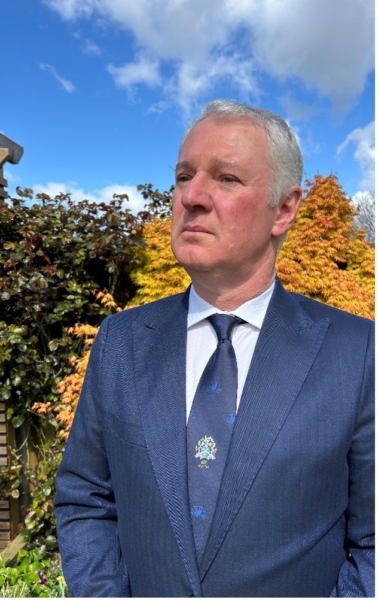 The Anniversary Tie – £25
A classic, elegant silk tie suitable for all formal and Livery occasions. Its refined design and anniversary crest make it a perfect keepsake for members, friends, and supporters of the Company.
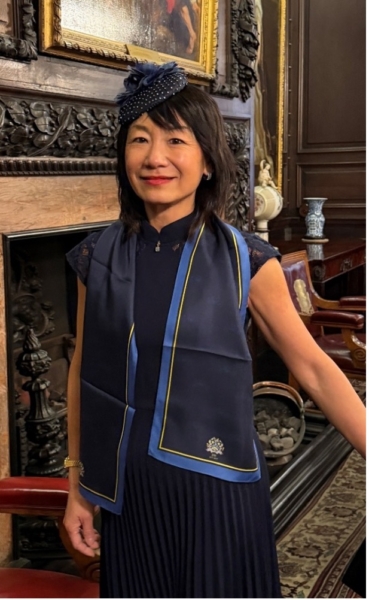
The Anniversary Scarf – £30
For the ladies, this light, luxurious, and beautifully finished silk scarf offers a stylish way to celebrate our heritage. Ideal for wearing at Company events or gifting to those who share our pride in the Coachmakers’ story.
These limited-edition items are available while stocks last. Whether worn with pride or treasured as a piece of Livery history, they are a fitting tribute to 350 years of craftsmanship, mobility, and service.
Join us in celebrating this landmark year for the Coachmakers and secure yours today by visiting the shop page on the Coachmakers’ website.