Coachlines - May 2026
29.05.26 Honorary Assistant David Barrett
A road less travelled: The Azores
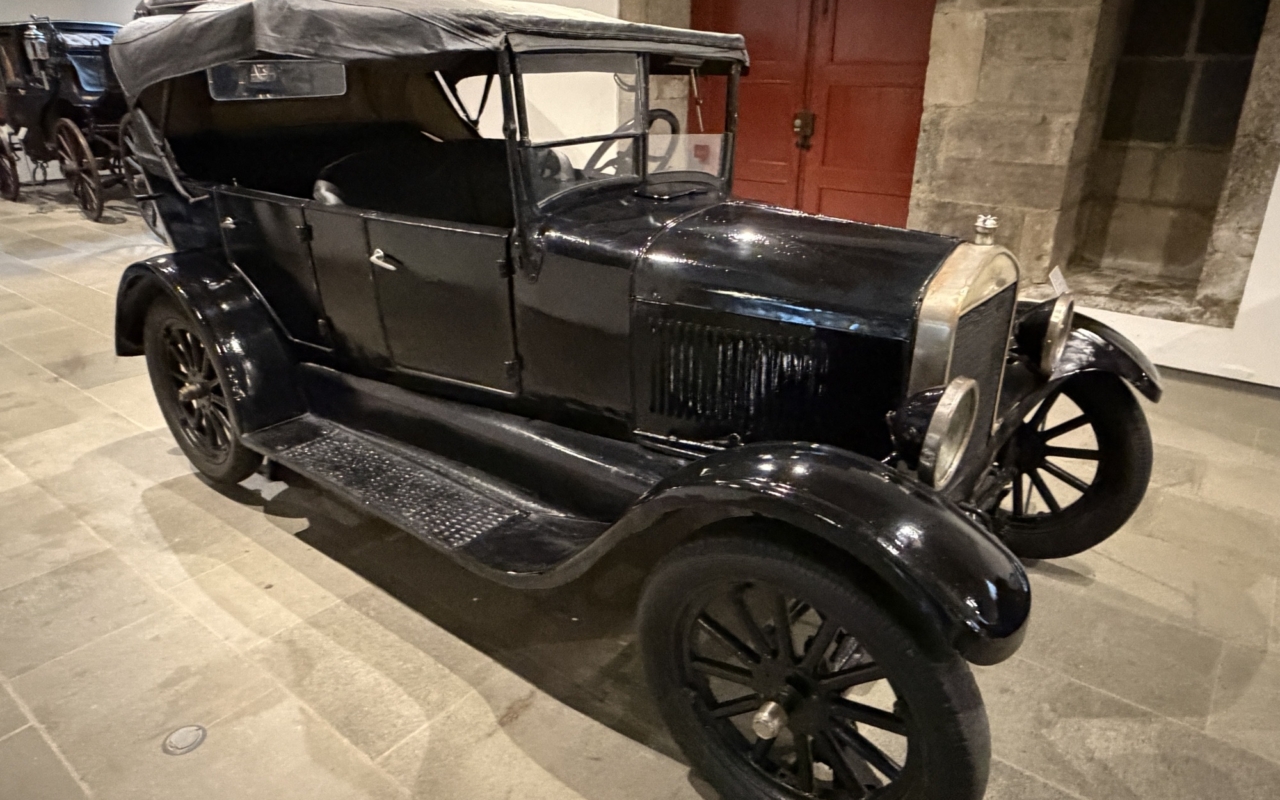
Pictured above: Ford Model T at Museu de Angra do Heroismo
Your correspondent this month has been to the Islands of the Azores, a group of nine volcanic islands mid-Atlantic, in the region of the ocean called Macaronesia. The islands are an autonomous region of Portugal, along with the Madeira Islands. They are 870 miles due west of Portugal and another 2,000 miles further on westward to North America. The nine islands are spread out over a distance of 370 miles.
 The uninhabited archipelago was first discovered and populated under the direction of Prince Henry the Navigator, an early Portuguese explorer, in 1427, and Portugal has retained the islands ever since.
The Azores enjoy a mild and stable climate year-round between 13-19C, with plenty of rain and fog. It never freezes and the islands are extremely green all year around, and very fertile. The early established economy was sugar cane (priced out by Brazil) and vineyards, which were finished off by volcanic eruptions.
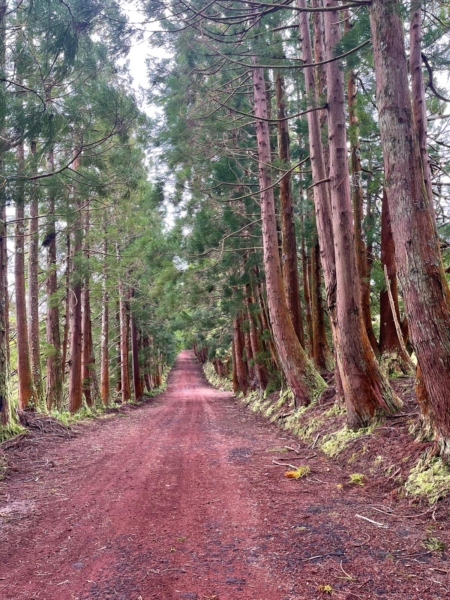
Today the economy is based on cattle farming exporting high quality milk and cheese, beef and tuna. Cattle live outside year-round which contributes to milk quality. Timber is important and they grow massive areas of Japanese Cedar trees with long, straight, thick trunks. These are used to build quake-proof houses (more flexible) and for export to IKEA. Energy is 25% geothermal and solar powered all manufactured goods are imported.
 The islands are made up of hundreds of volcanoes, most with extinct craters now farmed or providing impressive lakes. Mercilessly, just 26 volcanoes are rated active, with a modern early warning system in place. The second largest island, Terceira has an international airport shared with the US Air Force and the Portuguese military. The main recreation of the Azoreans is bull-running (similar to Spain’s Pamplona) and picnicking in the many parks and scenic areas. Tourism is not top of the earning industry due to the cool weather, rainfall and frequent fog.
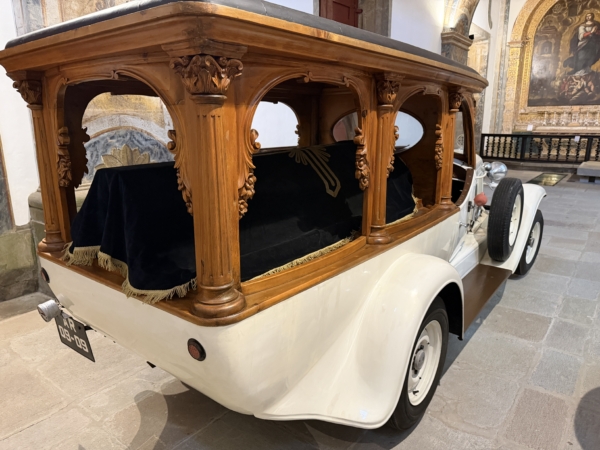
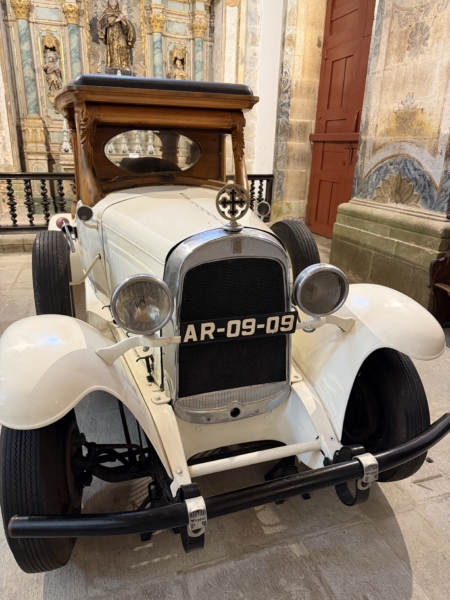 Turning to an item of industry interest, your scribe made a trip to the town of Angra do Heroismo, and the museum there which houses a remarkable automotive relic. On display is a 1926 US-built Willys Overland Whippit Six large car. This one, however had been converted to an elegant looking Hearst and is appropriately displayed in the chapel area; and I thought they only made WWII Jeeps! Willys Overland (pronounced Willis) was founded in Ohio in 1908 and became defunct in 1953. The company was merged with Kaiser Jeep, and the Jeep brand of course eventually passed to Chrysler. I read that the Willys Overland Six was an engineering disaster but the Great Depression of 1920-21 also brought the company to its knees.
The museum also houses a rather splendid Ford Model T, a four-door sedan built in 1926. Also on display were no less than 15 horse drawn carriages of every type from a Landau, via a Cha-a-banc to a Chaise and Caleche. Photos and details have all been supplied to the Senior Warden Mark Broadbent.