Coachlines - April 2026
30.04.26 Steward Mark Jurd
Charles Sandford Windover – the driving force behind a coach-building family
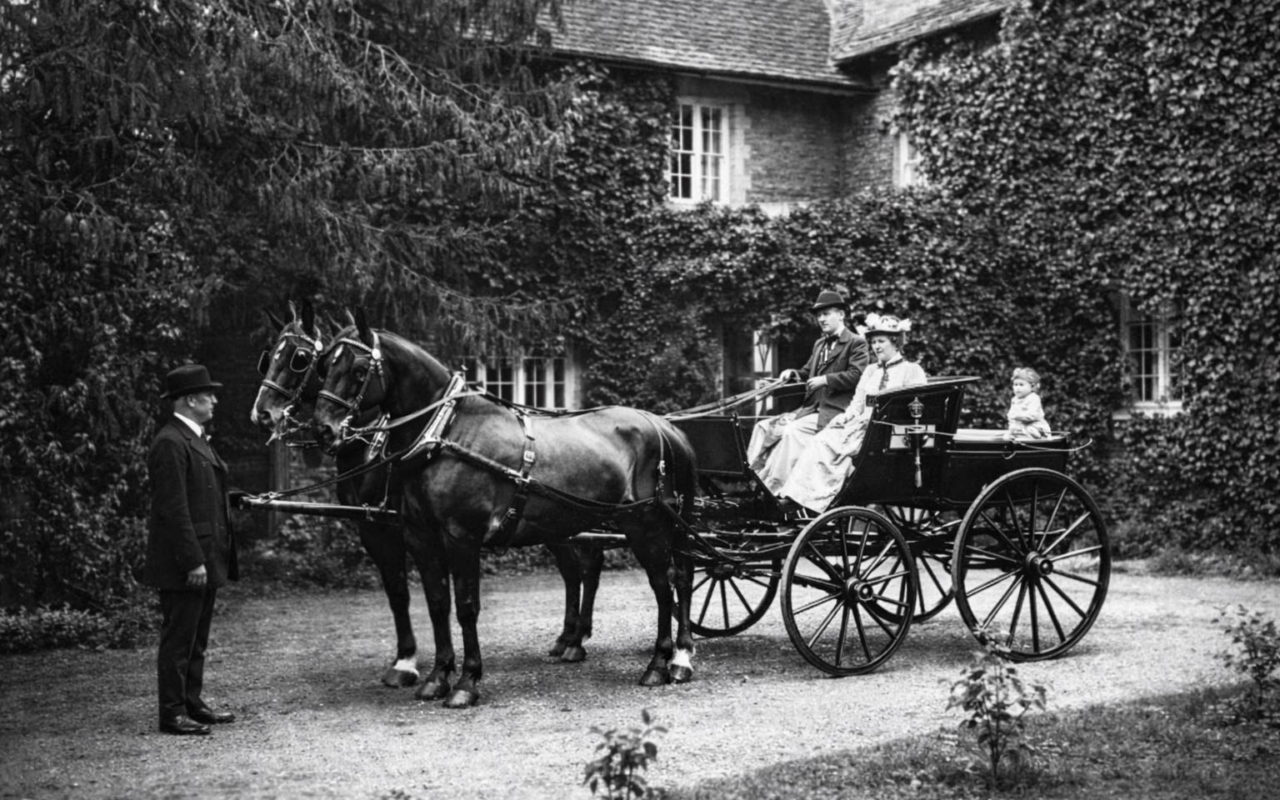
Pictured above: John Charles Windover with a company car
With our 350th anniversary approaching, it seems only right that we spend a moment looking back at the craft that brought the Company into being – coachmaking – and at some of the families who helped define it.
One such family is the Windovers, whose story does not begin in a grand London workshop, but rather in Devon, where they were working as saddlers and harness-makers as early as the 17th century. For generations they worked in leather, quietly building a reputation for sound, dependable craftsmanship. As roads improved and travel became more common, the move into carriage work came quite naturally. By 1796, Richard Windover had settled in Grantham, and the family’s gradual shift into coach-building was well under way.
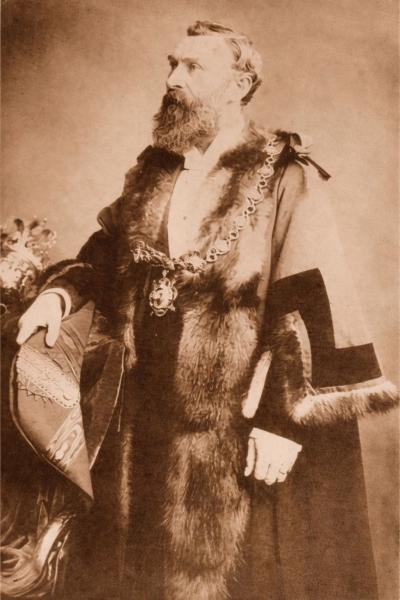
Charles Sandford Windover (1819-1900)
The real step forward came with Charles Sandford Windover (1819–1900). After spending time abroad in America and Australia, he returned and, in 1857, entered into partnership with FC Armstrong in Huntingdon. Before long, the firm carried his name – CS Windover, Carriage Builder – and from there it established itself among the leading makers of the day.
Under Charles’s guidance, the firm struck that familiar balance between tradition and progress. New materials such as steel and American hickory were introduced to reduce weight and improve strength, but never at the expense of sound construction. Its success was recognised with a gold medal at the first International Horse Show at Olympia – no small achievement.
What is particularly pleasing for us to note is that Charles was one of our own – a Liveryman of the Worshipful Company of Coachmakers and Coach Harness Makers, as well as serving as Mayor of Huntingdon.
From relatively modest beginnings, he built the business into a substantial enterprise, with London showrooms and branches as far afield as Paris, Bombay, and Sydney. His carriages were not extravagant, but they were exceptionally well made – elegant, reliable, and clearly understood by those who used them.
Looking at the company’s work, a few designs stand out.
The Dog Cart Phaeton
The Dog Cart Phaeton is a good example of practical ingenuity. With its reversible seating and ventilated body, it could be used for both sporting and social purposes, and driven single or tandem – versatility very much in keeping with its intended use.
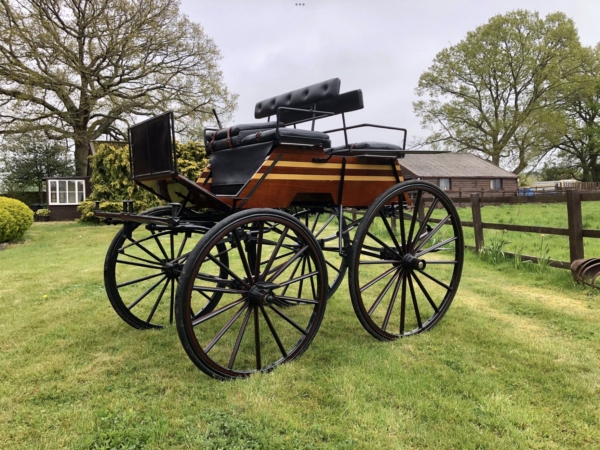
Dog Cart Phaeton
The Ralli Car
Then there is the Ralli Car, designed by Ernest Windover in 1885. Its most distinctive feature – the shafts running within the body – gave added width and stability. It proved so successful that many others copied the idea, which is perhaps the sincerest form of flattery in our trade.
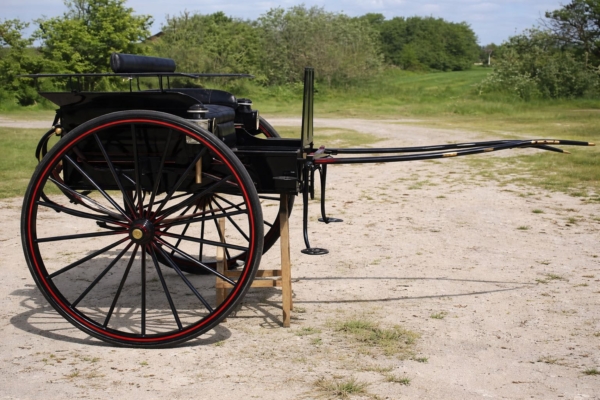
Ralli Car
The Convertible Phaeton
Finally, the Convertible Phaeton shows the benefit of those lighter American timbers, allowing for finer proportions without sacrificing strength. The example shown below, restored by Senior Warden Mark Broadbent of Fenix Carriages, is a fine reminder that the craft we represent is still very much alive.
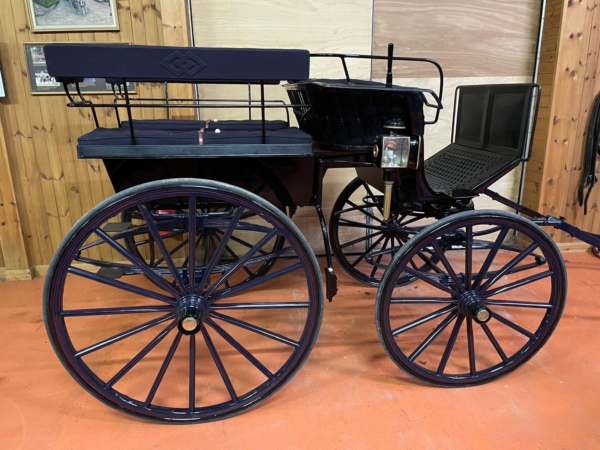
Convertible Phaeton
1947 Bentley Mark VI Windover Drop Head Coupe
After his death in 1900, the next generation carried the firm forward, and like many of the best coach-builders, they adapted to the arrival of the motor car. The same principles of proportion, finish, and craftsmanship were applied to motor bodies for marques such as Rolls-Royce, Bentley and Daimler. The business continued well into the 20th century before eventually becoming part of Henlys in 1956.
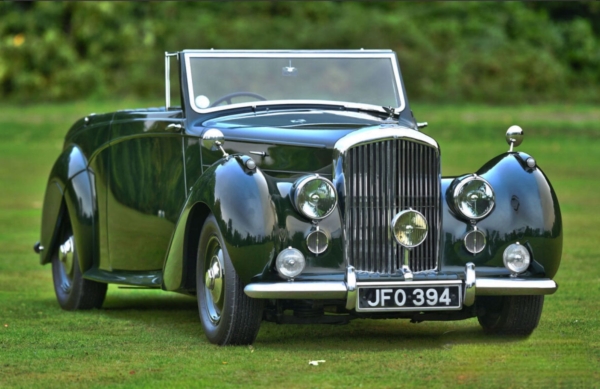
1947 Bentley Mark VI Windover Drop Head Coupe
The Windovers were not remarkable for a single invention, but for something rather more important — continuity. Generation by generation, they adapted to changing needs while holding fast to the principles that define good coach making: excellent design, technical innovation and skilled craftsmanship.
For us, that feels entirely familiar. They are, after all, the same traditions we continue to uphold today and will celebrate in our 350th anniversary year.