Coachlines - March 2026
30.03.26 Honorary Assistant David Barrett
What you may not know about the City: The Old Bailey
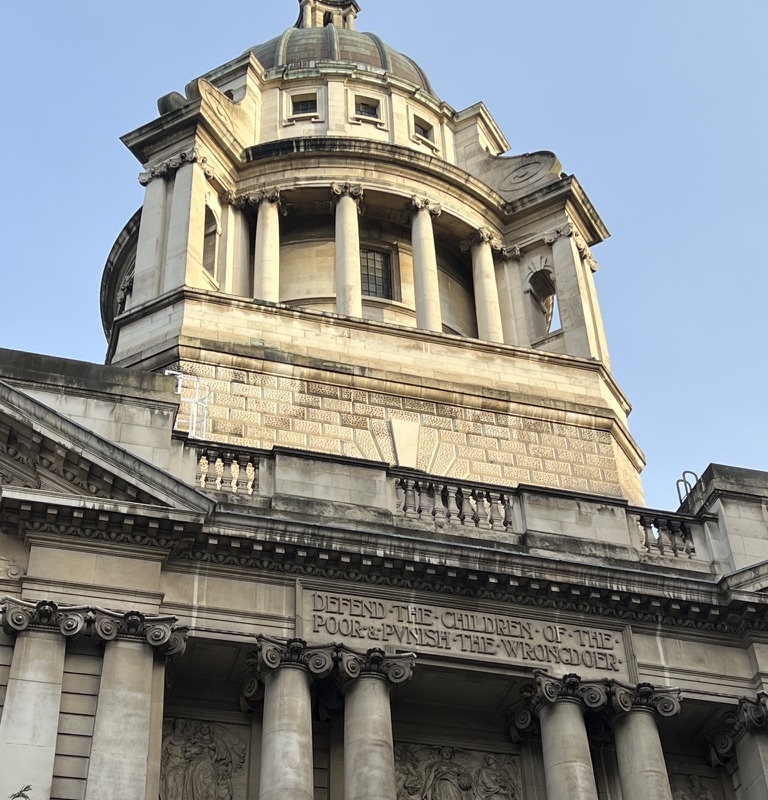
The Central Criminal Court known famously as the Old Bailey is the Crown Court within the City of London. The Court specialises in serious crime, mostly murder and sadly nowadays usually involving knife crime. The street outside follows the route of the ancient Roman wall around the City of London, which was part of the fortification’s bailey, hence the metonymic name.
The Old Bailey is unique amongst Crown Courts in the UK because the building, maintenance and services are all provided free by the City of London Corporation, as a service to the nation, instead of the department of justice. The judicial staff and proceedings are of course managed by the DoJ’s HM Courts & Tribunal Service.
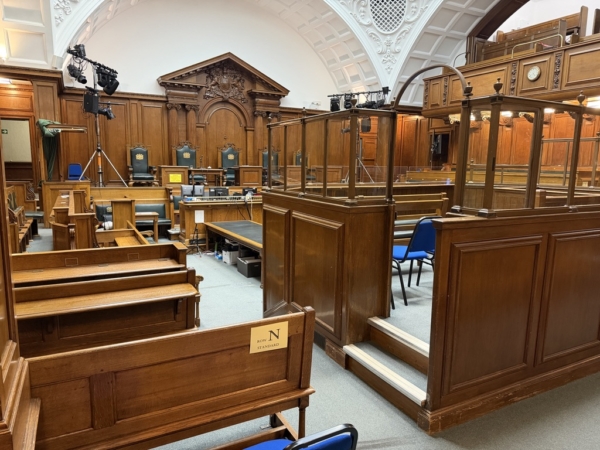 The Crown Court sitting in the Old Bailey hears major criminal cases generally from within Greater London. In exceptional cases, trials may be referred to the Old Bailey from other parts of England and Wales where local judicial expertise is not sufficient. The CCC generally has the capacity to accept a case with a minimum of delay for at least a committal hearing.
There are 15 judges appointed at the Old Bailey, currently eight women and seven men. The senior circuit judge is the Recorder of London; presently HH Judge Mark Lucraft KC. He is appointed by the Crown on the recommendation of the City of London Corporation. The appointment of a Recorder has existed since 1298.
He is supported by his number two, The Common Serjeant HH Judge Richard Marks KC. The Recorder is responsible for court list management, and assignment of cases to judges. He also holds key roles in the City of London, provides legal advice to the Lord Mayor and presides over the election of the Lord Mayor. On state visit occasions, at State Banquets, he undertakes the address of welcome to dignitaries.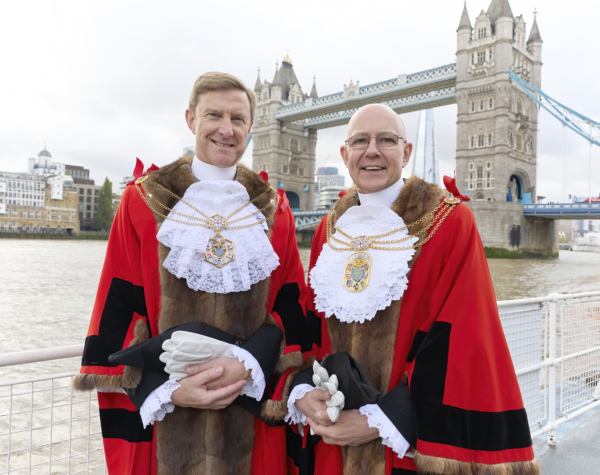
The two Sheriffs elected annually by the Liverymen at Common Hall, who serve in support of the Lord/Lady Mayor, reside at the Old Bailey, and each have an apartment there. The Sheriffs have numerous roles during their busy year, however one of the most important is in contributing to the welfare of judges.
There is genuine concern that judges can develop anxiety or depressive conditions due to the continual and appalling testimony that they hear regarding cruelty, violence, family distress and all that goes with criminal cases in every grisly detail. The Sheriffs take it in turn to host a luncheon on court days in the Judges’ Dining Room where they invite dignitaries, celebrities and interesting people such as business leaders, actors, journalists, men of the cloth and all serving Livery Masters. Guests are interspersed between the judges around the lunch table and provide interesting normal life conversations to give them a period of respite. This practise is recognised as being helpful for their wellbeing, and an enormous privilege if you are lucky enough to be invited.
Following each lunch the Recorder or Serjeant chooses a case being heard at an interesting phase where guests are invited to join the courtroom for the remainder of the sitting and listen to the proceedings. Some say this is the best part of a lunch invitation to the Old Bailey.
A courthouse has existed on Old Bailey since the 16th century when it was attached to the infamous Newgate Prison. The original part of the building was finished in 1902, and an extended south block with more modern court rooms, built over the Newgate site, was completed in 1972. The Old Bailey was damaged in the Blitz in 1940 and by an IRA car bomb in 1973, when one person was killed and 200 were injured. Since then, the windows are draped in Kevlar material to prevent glass shatter injury.
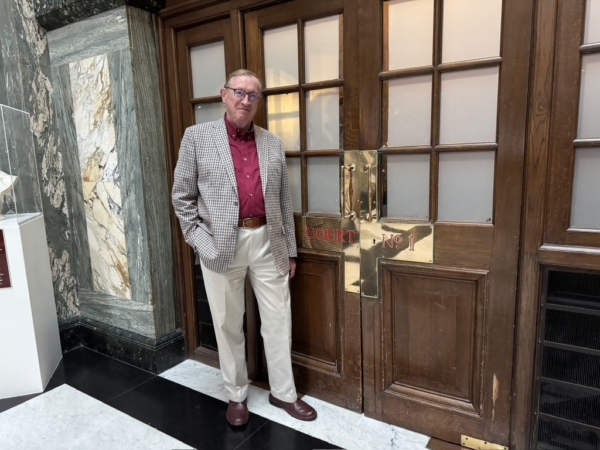
Of the original four court rooms, the most famous and iconic is court number one. Now a listed building and not secure enough for category A or B prisoners, it is used for various events. The list of famous defendants who have been tried in court number one is indeed impressive:
The playwright Oscar Wilde (1895) was tried for gross indecency. Other high-profile trials that defined 20th-century history include:
Robert Wood (1907): The Camden Town Murder
Dr. Crippen, murder and dismemberment of his wife (1910)
The WWII treasonous propaganda broadcaster William Joyce ‘Lord Haw-Haw’ (1945)
Ruth Ellis (1955) the last woman hanged
Timothy Evans & John Christie (1950s) for the 10 Rillington Place murders – a miscarriage of justice leading to the abolishment of the death penalty.
George Blake (1961) Cold War spy for the KGB
East End villains the Kray Twins (1968-69)
Jeremy Thorpe (1979), the politician tried for conspiracy to murder.
Ian Huntley (2003): The Soham, Suffolk, murderer who passed away in prison this month.
Defendants are not housed at Old Bailey overnight; but brought in daily by prison vans from category A and B prisons in the London area: HMP Bellmarsh (men) and HMP Bronzefield (women). They are all returned by 5pm after courts rise for the day.
Although not open to the general public without court business reasons, it is possible to book a Saturday morning tour costing around £25, see this link: https://www.eventbrite.com/e/guided-tour-of-the-old-bailey-tickets-954848075297
Tours include the grand marble halls, court number one, a modern court room, the holding cells and prisoner reception area.
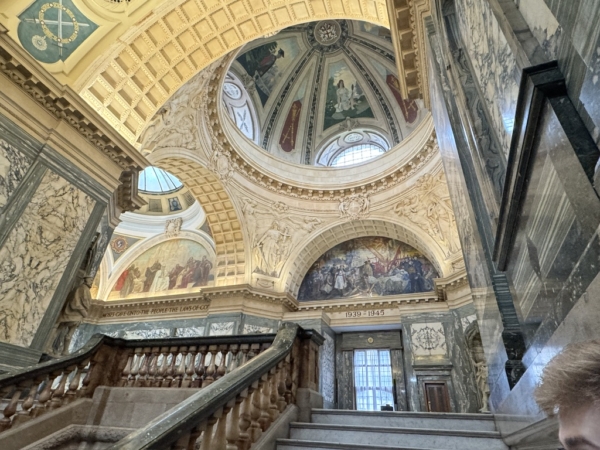 For those wishing to spend longer at the Old Bailey, there is a series of theatrical revues called ‘Trial & Error’ held annually in March in court number one. A cast of barristers and judges perform a series of vignettes on a theme of past cases heard in court number one. For an extra charge, premium tickets are available to sit in the jury box or defendants’ dock. You can register your interest in future events at trialanderrorevents@gmail.com

Coachmakers attended the Trial and Error show in March
The Old Bailey operates its own charity, The Sheriffs’ & Recorder’s Fund, which raises funds from special events and supporters. Prison leavers can apply for cash grants through the Probation Service which the S&R Fund will consider and award. Both the tours and the shows mentioned above support the S&R Fund.
I once had the privilege of visiting the very bowels of the building in the basement where there are some fascinating sights. Executions used to take place there and the three very small condemned prisoner holding cells are now carpentry, plumbing and electrician workshops. There is a narrow passage (Dead Man’s Walk) that led to the gallows with ever decreasing arched corridors to pass through. The river Fleet runs underneath the Old Bailey as it flows to the Thames – the basement has a deep hole covered with a thick steel plate, when slid open the river can be seen and heard flowing below, perhaps the only place it can be seen in central London – you may have to bribe someone to show you.